|
 Scientific Classifications explained » Amphibians » Ants » Aphids » Bees » Beetles » Birds » Bugs » Butterflies » Caterpillars » Damselflies » Dragonflies » Earwigs » Flies » Frog/Leafhoppers » Fungi » Galls » Grasshoppers » Harvestmen » Hoverflies » Lacewings » Ladybirds » Leaf Mines » Lichens » Mammals » Millipedes » Mosses » Moths » Sawflies » Slugs » Snails » Spiders » Trees & Shrubs » Wasps » Wild Flowers » Woodlice » Postboxes |
UK Nature > Wild Flowers > Blue & Purple Wild Flowers > Vinca major
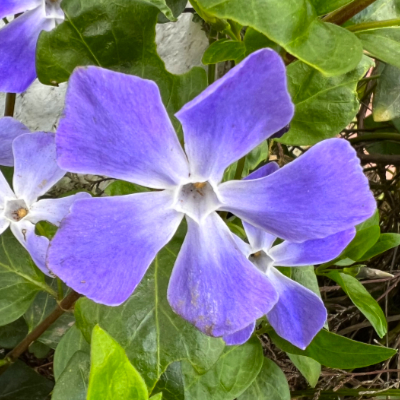
Scientific Name: Vinca major Common Name: Greater Periwinkle Vinca major, more commonly known as the Greater Periwinkle, is a slender-stemmed creeping evergreen plant from the family Apocynaceae that is a ground cover plant and will tolerate anything from full sun to dense shade under large trees and is to be found natively in southern Europe. The genus name Vinca is derived from the Latin vincire meaning bind, as the long stems were used in the making of garlands, Vinca major referring to the size of the plant, with leaves growing to 3cm in length and Vinca minor varieties having smaller foliage. The leaves of are light green when first emerging, deepening to a glossy dark green with age providing very attractive winter foliage. The flowers which appear from spring through to early summer are an extremely pretty, purple-blue colour adorning the weed suppressing carpet of growth to amazing effect especially with the arching branches of new growth. It is an invasive plant, as the creeping nature means it will self-root where the shoots land. The early spring flowers which will attract insects and bees, will take the plant normally to a height of about 45cm. |
|

https://www.uknature.co.uk is a website dedicated to showing the immense diversity of UK nature and wildlife. Our vast range of habitats, from lowland arable to snow covered mountains, from storm-ravaged coastlines to peaceful inland freshwater lakes and rivers, from dry, sandy heaths to deciduous and coniferous forests, all these habitats contribute to the abundance of UK nature. We have wild birds in huge numbers either residing or visiting our shores (597 recorded species as at July 2013) and we must also not forget the humble back garden with its grass lawns, flower beds filled with nectar rich flowers, shrubs and trees, all designed to attract huge numbers of insects such as bees, moths, butterflies and hoverflies; and finally the small ponds which provide safe havens for frogs, toads, newts and even slow worms and grass snakes. www.uknature.co.uk is the showcase for my personal passion, photographing uknature in all its glory. I sincerely hope you all enjoy the fruits of my labours. This site and all images contained therein is © Jeremy Lee 2004 - 2025. All Rights Reserved. Site design by Jeremy Lee. Site development & IT Support by Stuart Lee. |