
|
 Scientific Classifications explained » Amphibians » Ants » Aphids » Bees » Beetles » Birds » Bugs » Butterflies » Caterpillars » Damselflies » Dragonflies » Earwigs » Flies » Frog/Leafhoppers » Fungi » Galls » Grasshoppers » Harvestmen » Hoverflies » Lacewings » Ladybirds » Leaf Mines » Lichens » Mammals » Millipedes » Mosses » Moths » Sawflies » Slugs » Snails » Spiders » Trees & Shrubs » Wasps » Wild Flowers » Woodlice » Postboxes |
UK Nature > Trees & Shrubs > Populus nigra var. italica (Lombardy Poplar)
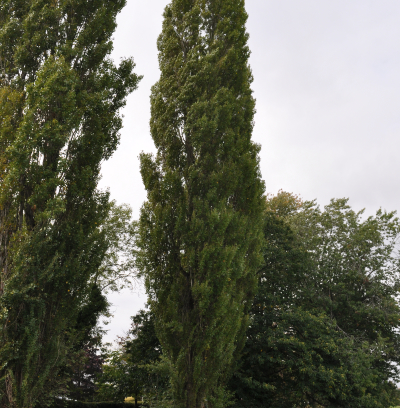
Scientific Name: Populus nigra var. italica Common Name: Lombardy Poplar Populus nigra var. italica, commonly known as the Lombardy poplar, is a fast-growing tree recognized for its narrow, columnar shape with a single, straight trunk and upward-sweeping branches. It is a male clone of the black poplar that was discovered in Italy in the 18th century and is now widely used for screens, windbreaks, and as an architectural specimen in parks and along driveways. The tree is well-suited to moist soils and is valued for its strong visual presence and ability to grow to impressive heights of up to 30 meters. Its defining feature is a very narrow, upright, and columnar form, sometimes referred to as a fastigiate habit. It can grow quite tall, reaching heights of up to 30 meters, while maintaining a narrow spread of about 5 meters. The leaves are diamond-shaped to triangular, emerging reddish-brown in spring, becoming fresh green in summer, and turning yellowish-green in autumn. It was introduced into the UK in the 1750s and is now found throughout the world. |
|

https://www.uknature.co.uk is a website dedicated to showing the immense diversity of UK nature and wildlife. Our vast range of habitats, from lowland arable to snow covered mountains, from storm-ravaged coastlines to peaceful inland freshwater lakes and rivers, from dry, sandy heaths to deciduous and coniferous forests, all these habitats contribute to the abundance of UK nature. We have wild birds in huge numbers either residing or visiting our shores (597 recorded species as at July 2013) and we must also not forget the humble back garden with its grass lawns, flower beds filled with nectar rich flowers, shrubs and trees, all designed to attract huge numbers of insects such as bees, moths, butterflies and hoverflies; and finally the small ponds which provide safe havens for frogs, toads, newts and even slow worms and grass snakes. www.uknature.co.uk is the showcase for my personal passion, photographing uknature in all its glory. I sincerely hope you all enjoy the fruits of my labours. This site and all images contained therein is © Jeremy Lee 2004 - 2025. All Rights Reserved. Site design by Jeremy Lee. Site development & IT Support by Stuart Lee. |